 Wasatch
This style builds a yard from rock, drought-tolerant plants and well-planned drip irrigation. Boulders and gravel give structure year round, while plants such as penstemon, yarrow, Russian sage, lavender and native grasses bring seasonal color. Paths and a patio keep the yard usable, so it is a place to live in, not just a place to look at.
In Utah it suits homeowners who want to reduce watering, replace a lawn nobody uses, or match a yard to the dry climate. It also suits park strips, side yards and slopes where grass is hard to maintain. Success depends on soil preparation, plant spacing and irrigation layout more than on the rock.
The Desert & Water-Wise Palette
Boulders, gravel, native and drought-tolerant plants.
- Red clay
#c98a5e - Sand
#e3d3b8 - Sagebrush green
#8a9a6b - Dark umber
#7a5a46
Photos
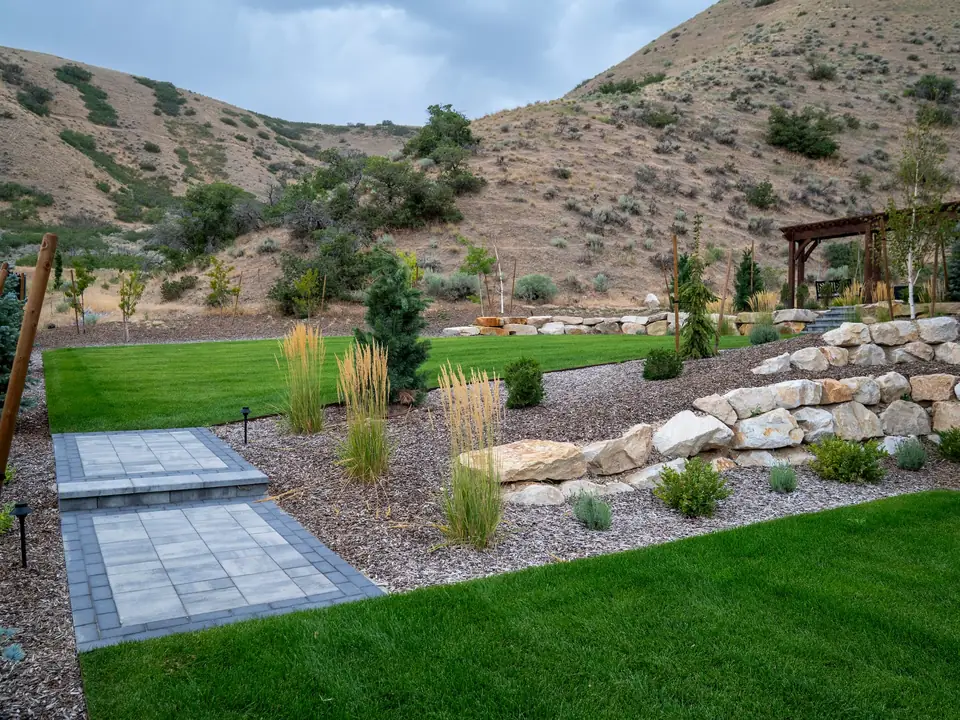 Project by the Utah landscape pro we refer
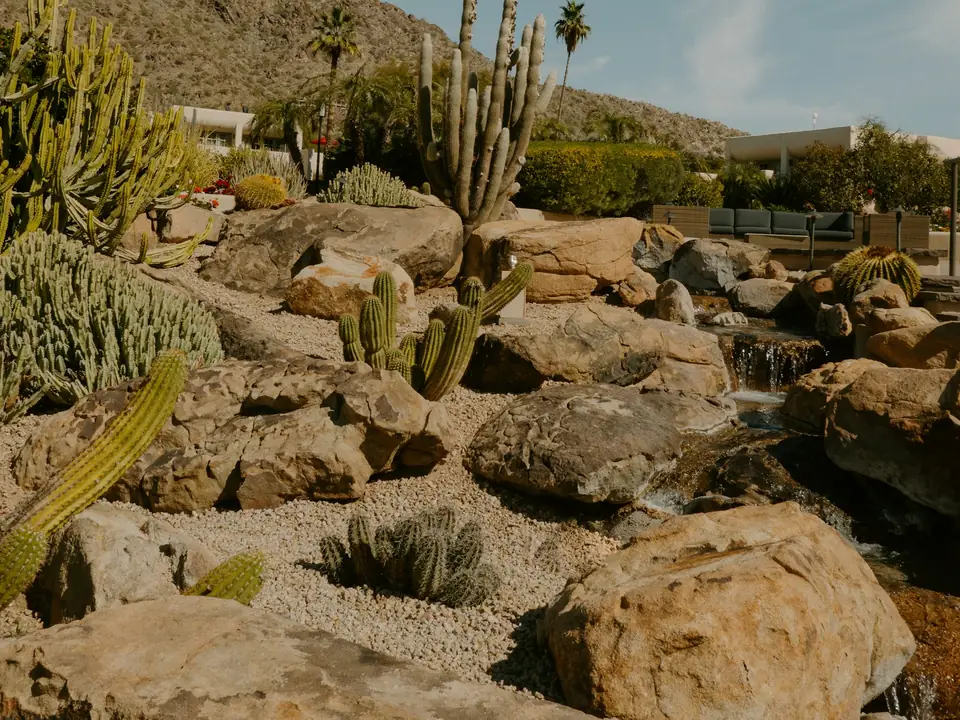 Photo: Emily Irene Photo Co. on Unsplash
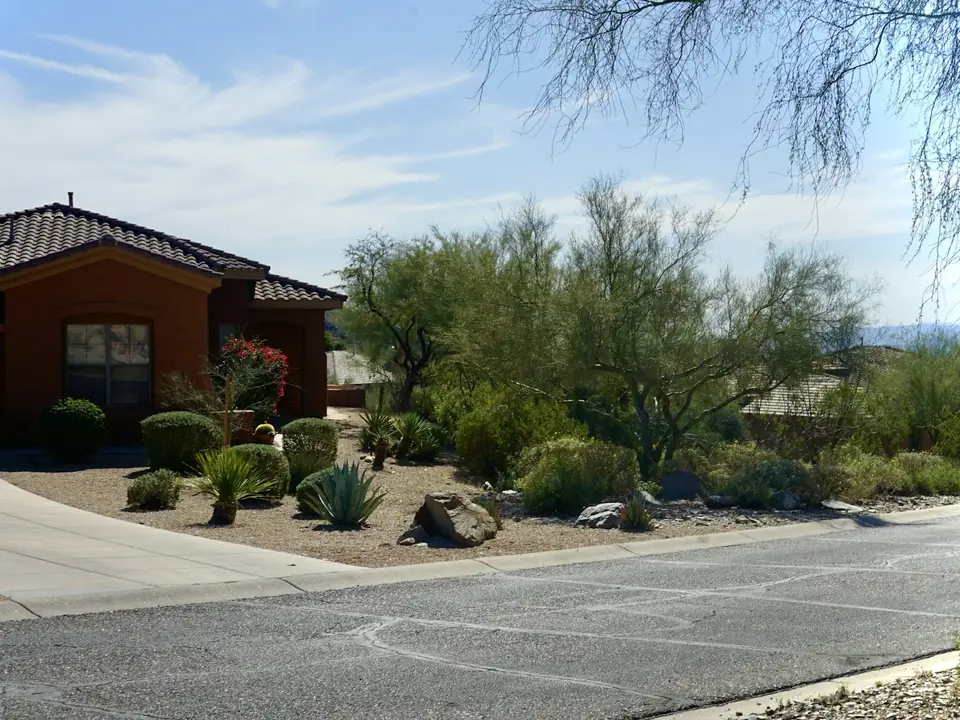
Typical Features
- Boulder groupings. Large stones partly buried and set in odd-numbered groups for a natural look.
- Drip-irrigated beds. Zones sized to each plant group so every plant gets water without overspray.
- Gravel or decomposed granite paths. Permeable surfaces that connect patio, gate and garden.
- Dry creek bed. A rock swale that handles runoff and adds a landscape feature without water.
- Seasonal color. Perennials and ornamental grasses chosen to bloom in sequence.
- Stone patio and fire area. A paved sitting area with a fire feature gives the yard a place for people, so the planting becomes a setting rather than the whole point.
Materials That Suit It
- Native boulders. Local or regional stone that matches the surroundings.
- Crushed rock or gravel. In warm tones that suit your home's exterior colors.
- Drought-tolerant perennials. Penstemon, yarrow, agastache and catmint.
- Native grasses and shrubs. Blue grama, serviceberry and mountain mahogany.
- Steel or stone edging. Keeps rock and soil in their lanes.
Making It Work in Utah
- Water. Utah is among the driest states, and water-wise yards use drip irrigation, mulch and plants matched to the site. Group plants by water need and avoid watering rock.
- Freeze-thaw and clay. Valley soils often hold water and move with frost. Amend beds and grade for drainage so crowns do not sit wet in winter.
- Sun and heat. South and west exposures get intense summer sun, so choose plants rated for full sun and heat reflected from walls and paving.
- Wind. Spring and canyon winds dry young plants. Mulch, windbreaks and a good first-year watering schedule help them establish. Rock beds still grow weeds. Quality fabric or none, an adequate depth of mulch or gravel and drip emitters placed at plants rather than spray heads keep maintenance low.
Project guides: Water-wise landscaping · Patios and pavers · Cost guide · Cost guide
Desert & Water-Wise Questions
Are there rebates for removing my lawn?
Utah's Landscape Incentive Program, through Utah Water Savers, has advertised up to $3 per square foot since 2023, varying by water provider and city eligibility. Apply and get approval before removing any grass.
Will it look like a gravel lot?
Not if it is planned with layered planting, varied rock sizes and defined paths. Utah State University Extension publishes water-wise plant lists by region that designers often draw from.
What does a conversion cost?
The modelled range is $8 to $18 per square foot before any rebate, covering removal, drip, plants and rock. It is an orientation figure, not a quote. See the cost guide.
How long do water-wise plants take to fill in?
Most perennials and grasses need a couple of seasons to establish, so beds look sparse at first. Planting smaller and letting plants mature is a common way to save cost.
Start Your Brief With Desert & Water-Wise
The design brief opens with Desert & Water-Wise first in the photo rounds. Pick what you like, add features and budget, and one independent, Utah-licensed design-build pro gets the brief. Free, no obligation.
Design Your BackyardOther Styles
Photos: projects by the independent Utah landscape pro we refer (labelled as such, used with permission) and Unsplash stock photos (inspiration only, not anyone's work), all credited on the photo credits page. Fallback illustrations are original artwork.